

If you have been injured due to someone else's negligence in South Carolina, understanding the claims process is essential to protecting your rights and recovering fair compensation. From gathering evidence at the scene to negotiating with insurance companies or going to trial, every step matters. This guide walks you through the personal injury claim process in South Carolina so you know exactly what to expect, what deadlines apply, and how an experienced attorney can make a difference in the outcome of your case.
What Is a Personal Injury Claim?
A personal injury claim is a legal action brought by a person who has been harmed due to another party's negligence, recklessness, or intentional conduct. In South Carolina, these disputes arise when one person suffers harm from an accident or injury and another individual might be legally responsible for that harm.
Common personal injury cases include car accidents, truck collisions, motorcycle crashes, slip and fall incidents, medical malpractice, and workplace injuries. Whether the harm resulted from an accident or an intentional act, a civil claim for damages is separate from any criminal case brought by the State.
Step 1: Seek Immediate Medical Attention
Your health comes first. Even if your injuries seem minor, seek medical care right away. Some injuries, such as soft tissue damage or concussions, may not present symptoms for days or weeks. A prompt medical evaluation creates documentation that directly links your injuries to the incident.
Medical records serve as critical evidence when pursuing compensation. They help establish the severity and permanence of your injuries, which directly impacts the value of your claim. Keep all records, receipts, and bills organized from day one.
Step 2: Gather and Preserve Evidence
Strong evidence is the foundation of any successful personal injury claim. Immediately after an accident, take the following steps:
- Photograph the accident scene, vehicle damage, and visible injuries
- Collect contact information from witnesses
- Request a copy of the police report
- Keep a journal documenting your pain, symptoms, and limitations
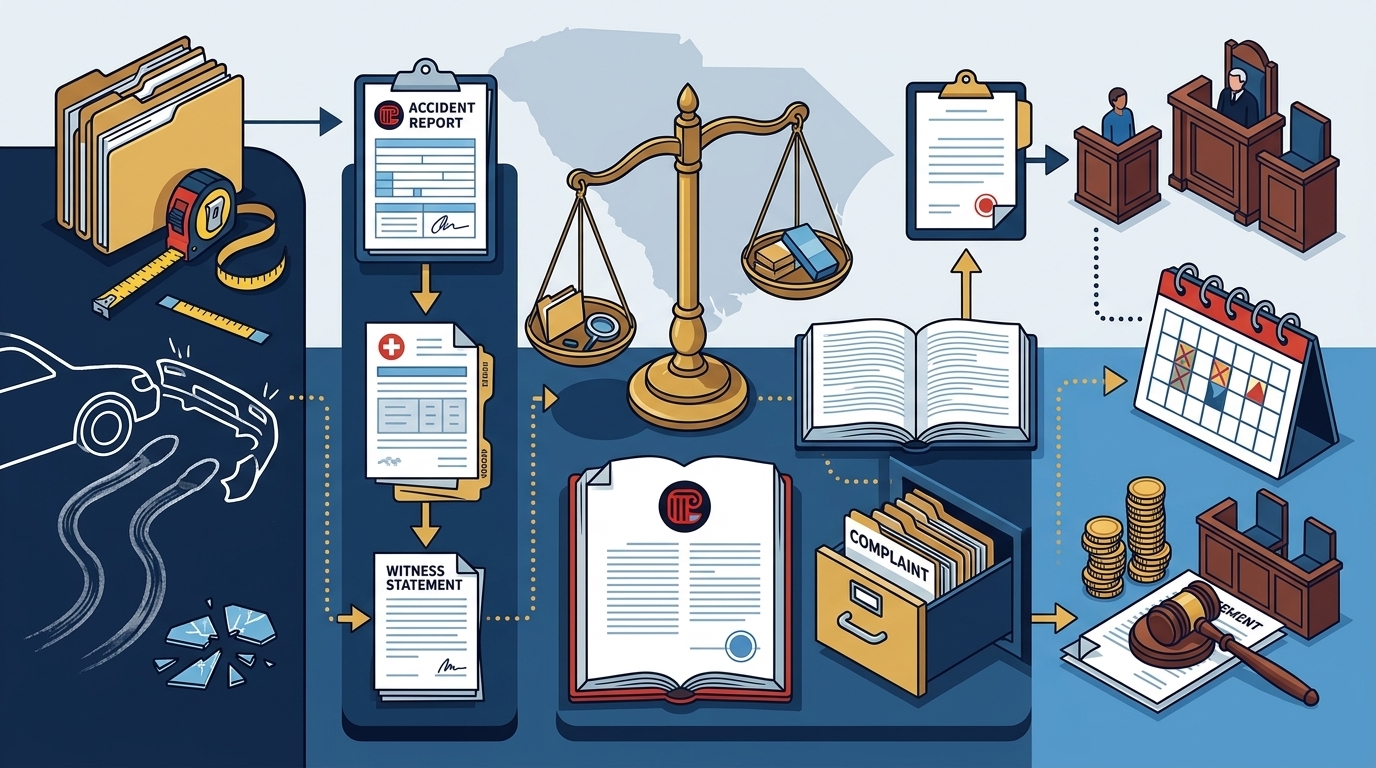
An experienced attorney will conduct a thorough investigation to identify all liable parties. This involves gathering vital evidence like photos, requesting police reports, and collecting witness statements to establish negligence.
Step 3: Consult a Personal Injury Attorney
Hiring a knowledgeable Charleston personal injury lawyer early in the process can significantly improve your chances of a favorable outcome. An attorney handles every stage of your claim, from the initial gathering of evidence to filing claims against at-fault defendants and pressing your rights in settlement talks and court.
Why Legal Representation Matters
Insurance companies employ skilled adjusters whose goal is to minimize payouts. Without proper legal guidance, many victims settle for inadequate amounts. A top personal injury attorney in Charleston can accurately calculate your damages and negotiate aggressively on your behalf.
Contingency Fee Arrangements
A contingency fee is a payment structure in which the attorney receives a percentage of the client's settlement rather than charging upfront fees. This model aligns the attorney's interests with yours and means you pay nothing unless you win your case.
Step 4: File an Insurance Claim
After retaining an attorney, the next step is filing a claim with the at-fault party's insurance company. Your lawyer will handle communications with the insurer, protecting you from making harmful statements that could jeopardize your claim.
It is important to understand that insurance companies are not automatically required to pay medical bills and lost wages resulting from accidents. Payment typically comes through a settlement agreement or court verdict. Proper documentation and legal guidance are crucial in determining the extent of compensation due.
Step 5: Negotiation and Litigation
Most personal injury cases in South Carolina are resolved through settlement negotiations rather than trial. Your attorney will present your case to the insurer with supporting evidence and a demand for fair compensation.
Settlement vs. Trial
If the insurance company refuses to offer a fair settlement, your attorney may file a lawsuit and take the case to court. Most South Carolina personal injury cases are filed in the Circuit Court, also known as the Court of Common Pleas.
| Resolution Path | Typical Timeline | Key Advantage |
|---|---|---|
| Insurance Settlement | 3 to 12 months | Faster resolution, lower legal costs |
| Mediation | 6 to 18 months | Neutral third-party facilitation |
| Trial/Litigation | 1 to 3+ years | Potentially higher compensation |
Comparative Negligence in South Carolina
Comparative negligence is a legal doctrine that reduces a plaintiff's recovery based on their share of fault for the accident. Under SC Code Section 15-38-10, if you are more than 50 percent at fault, you cannot recover any compensation. Your attorney will work to both demonstrate defendant fault and defend against allegations of contributory negligence.
South Carolina Statute of Limitations
A statute of limitations is a law that sets a deadline on your right to file a lawsuit in civil court. In South Carolina, the statute of limitations for most personal injury claims is three years from the date of the injury, as established under S.C. Code Section 15-3-530(5).
Key exceptions include:
- Claims against government entities must be filed within two years under the South Carolina Tort Claims Act
- Minors have until one year after their 18th birthday to file
- The discovery rule may extend the deadline when injuries are not immediately apparent
- Workers' compensation claims must be filed within two years of the injury date
Missing this deadline means your claim is likely barred forever, regardless of how strong your case may be.
Types of Damages You Can Recover
If your claim is successful, you may be entitled to compensation that covers both economic and non-economic losses:
| Damage Type | Examples |
|---|---|
| Economic Damages | Medical bills, lost wages, future earning capacity, property damage |
| Non-Economic Damages | Pain and suffering, emotional distress, loss of enjoyment of life |
| Punitive Damages | Awarded in cases of gross negligence or intentional misconduct |
An experienced attorney can evaluate the full scope of your losses, including future medical needs and long-term impacts on your quality of life.
Key Takeaways
- Seek medical attention immediately after an accident to document your injuries.
- Preserve all evidence, including photos, witness information, and police reports.
- Consult with a South Carolina personal injury attorney as early as possible.
- South Carolina enforces a three-year statute of limitations for most personal injury claims.
- Insurance companies are not required to pay until a settlement or verdict is reached.
- If you share more than 50% fault, you cannot recover compensation under South Carolina's comparative negligence law.
- Many personal injury attorneys work on a contingency fee basis, so you pay nothing upfront.
Frequently Asked Questions
How long do I have to file a personal injury claim in South Carolina?
You generally have three years from the date of injury to file a personal injury lawsuit in South Carolina under S.C. Code Section 15-3-530(5). Exceptions exist for minors, claims against government entities (two-year limit), and cases where injuries are discovered later.
Do I need a lawyer to file a personal injury claim?
While not legally required, hiring an experienced personal injury attorney dramatically improves your chances of receiving fair compensation. Attorneys handle evidence gathering, insurance negotiations, and court proceedings so you can focus on recovery.
How much does a personal injury lawyer cost?
Most personal injury lawyers in South Carolina work on a contingency fee basis, meaning they only get paid if you win your case. There are typically no upfront costs or hourly fees.
What is comparative negligence in South Carolina?
South Carolina follows a modified comparative negligence system. If you are partially at fault for your injury, your compensation is reduced by your percentage of fault. If you are more than 50% responsible, you are barred from recovering any damages.
How long does a personal injury case take to resolve?
The timeline varies based on the complexity of the injury, the clarity of facts, and whether the case settles or goes to trial. Simple settlements may resolve in a few months, while complex litigation can take several years.
What damages can I recover in a South Carolina personal injury case?
You may recover compensation for medical bills, lost wages, future earning capacity, pain and suffering, emotional distress, and in some cases, punitive damages for gross negligence.
What should I do immediately after an accident?
Seek medical attention, document the scene with photographs, gather witness contact details, file a police report, and contact a personal injury attorney before speaking with any insurance company.
Can I still file a claim if I was partially at fault?
Yes, as long as you are 50% or less at fault, you can still recover damages in South Carolina. Your compensation will be reduced by your percentage of fault.
Get the Help You Deserve Today
Filing a personal injury claim in South Carolina does not have to be overwhelming. With over 25 years of experience representing injury victims across the state, Christmas Injury Lawyers is ready to fight for the compensation you deserve. Contact us today for a free consultation and let our team handle the legal complexities while you focus on healing.