

How to Get Compensation for a Work Injury Under the SC Workers' Compensation Act
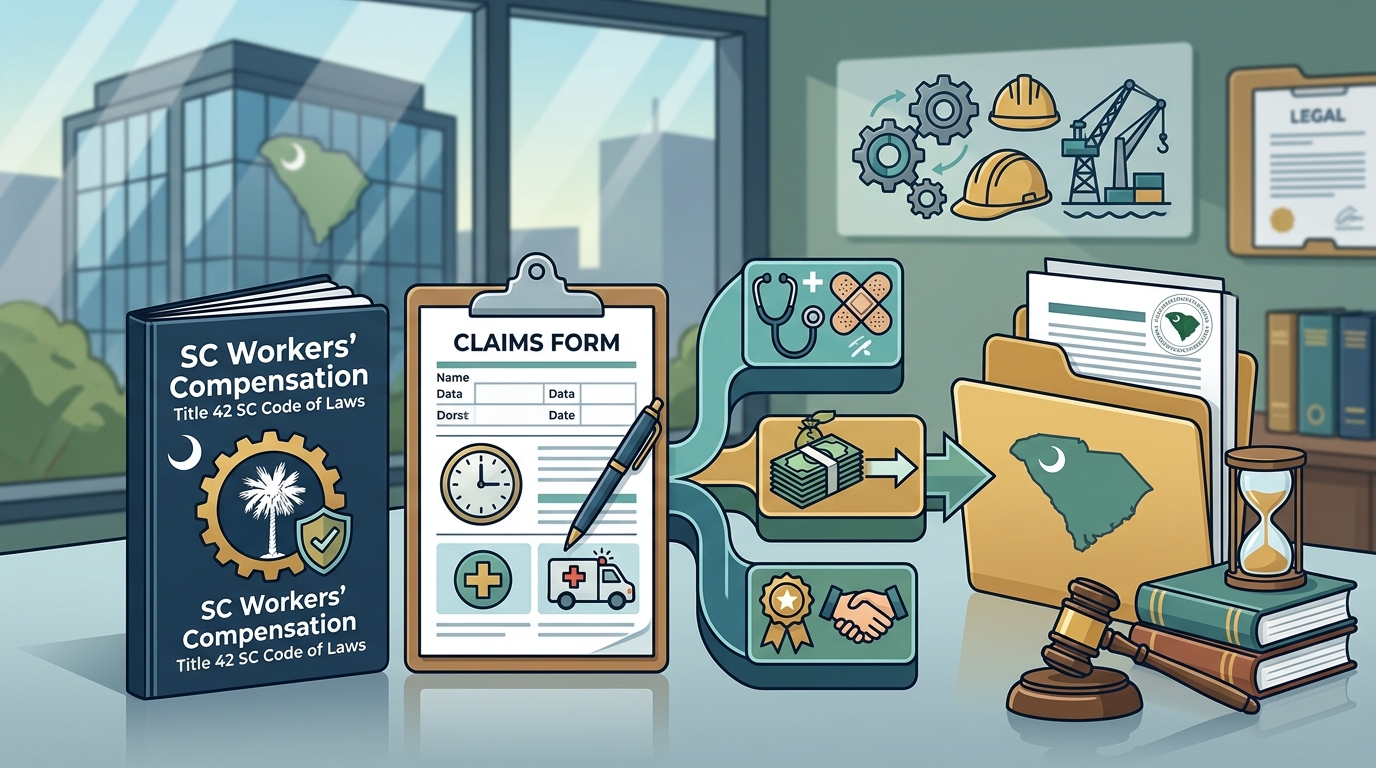
Getting hurt on the job is stressful enough without having to figure out how the workers' compensation system works. If you were injured at work in South Carolina, the law provides a path to medical care, wage replacement, and disability benefits. The South Carolina Workers' Compensation Act is the state law (Title 42 of the SC Code of Laws) that governs benefits for employees who suffer work-related injuries or illnesses. Understanding your rights under this law is the first step toward financial recovery. Below, the Charleston workers' compensation lawyers at Christmas Injury Lawyers break down every step of the process so you can take action with confidence.
Who Is Eligible for Workers' Compensation in South Carolina?
Workers' compensation eligibility in South Carolina is broad. Most employers with four or more employees are legally required to carry workers' compensation insurance. The system operates on a no-fault principle, which means you do not have to prove your employer was negligent to qualify for benefits. You simply need to show that your injury happened on the job.
Coverage extends to full-time employees, many part-time workers, and even some agricultural workers. You are also covered if you aggravate or re-injure a pre-existing medical condition while working. Independent contractors are generally not covered, though they may have other legal options if a third party's negligence caused the injury.
Types of Benefits Available Under the Act
The South Carolina Workers' Compensation Act provides three core categories of benefits: medical benefits, lost wages, and permanent disability. There is no recovery for pain and suffering under the Act, which is an important distinction from standard personal injury claims.
| Benefit Type | What It Covers | Key Details |
|---|---|---|
| Medical Benefits | Doctor visits, surgery, hospitalization, prescriptions, prosthetic devices, rehab | Continues as long as your doctor deems care necessary |
| Temporary Total Disability (TTD) | Lost wages when you cannot work at all | 66⅔% of your average weekly wage, up to the maximum compensation rate |
| Temporary Partial Disability | Reduced earnings from lighter duty or fewer hours | 66⅔% of the difference between pre- and post-injury wages |
| Permanent Disability | Lasting impairment after reaching maximum medical improvement (MMI) | Paid per a statutory schedule based on body part and impairment rating |
| Death Benefits | Burial expenses and survivor benefits for families | Available when a work injury results in death |
Maximum medical improvement (MMI) is the point at which your doctors determine you have reached a medical plateau and are unlikely to get significantly better or worse. For 2026, the SC Workers' Compensation Commission set the maximum weekly compensation rate at $1,189.94.
Step-by-Step: Filing Your Workers' Comp Claim
1. Get Medical Attention Immediately
Seek medical care right away after a work injury. This protects both your health and your legal claim. In South Carolina, your employer has the right to choose your treating doctor, so ask your employer to send you to their authorized provider. If it was an emergency, get care first and coordinate with your employer afterward.
2. Report the Injury to Your Employer in Writing
South Carolina law requires you to report your workplace injury or illness to your employer in writing within 90 days. Even if your supervisor already knows what happened, formal written notice is still legally required. The sooner you report, the better your chances of timely benefits.
3. File a Claim With the SC Workers' Compensation Commission
To officially start the process, submit Form 50 (for an injury) or Form 52 (for a death claim) to the South Carolina Workers' Compensation Commission along with the required $50 filing fee. An experienced workers' compensation attorney can handle this paperwork for you so deadlines and forms are never missed.
How Workers' Compensation Pays You
Temporary total disability (TTD) is the weekly benefit paid when a doctor writes you out of work entirely. Under S.C. Code Ann. §42-9-10, the insurance carrier pays you 66⅔% of your pre-injury average weekly wage, capped at the maximum compensation rate. If you can return to work at reduced pay or fewer hours, you may receive temporary partial disability benefits under §42-9-20.
At the end of your case, after reaching MMI, your doctor will assign a permanent impairment rating. This rating becomes the building block for calculating your permanent disability compensation. Learn more about how these calculations work in our guide to how workers' compensation pays you in South Carolina.
What to Do If Your Claim Is Denied
Insurance companies sometimes deny part or all of a workers' compensation claim, or try to stop benefits before you reach MMI. If this happens, you have the right to request a hearing before the Workers' Compensation Commission, where a Commissioner will hear testimony and review evidence to decide which benefits are owed.
Common reasons for denial include disputes over whether the injury is work-related, disagreements about your disability rating, or allegations that a pre-existing condition is the true cause. Having an attorney on your side levels the playing field. Learn how long your benefits should last in our article on workers' compensation benefit duration.
Third-Party Claims: Additional Compensation
A third-party claim is a separate personal injury lawsuit filed against someone other than your employer or co-worker whose negligence contributed to your injury. Unlike workers' compensation, a third-party lawsuit can include damages for pain and suffering and full lost wages.
Common scenarios include injuries caused by defective equipment (product liability), negligent subcontractors on construction sites, or car accidents while on the job. Pursuing a third-party claim alongside your workers' comp case can significantly increase your total recovery.
Key Takeaways
- South Carolina's workers' compensation system is no-fault. You do not need to prove employer negligence.
- Most employers with four or more employees must carry workers' comp insurance.
- Report your injury in writing within 90 days and file Form 50 with the Commission.
- TTD benefits pay 66⅔% of your average weekly wage, capped at $1,189.94 per week for 2026 injuries.
- Your employer chooses your treating doctor. Do not seek unauthorized care without approval.
- If your claim is denied, you can request a hearing before the SC Workers' Compensation Commission.
- A third-party lawsuit may provide additional compensation beyond workers' comp benefits.
Frequently Asked Questions
How long do I have to report a work injury in South Carolina?
You must report your workplace injury to your employer in writing within 90 days of the accident or the discovery of a work-related illness. Reporting sooner is always recommended to protect your claim.
Can I choose my own doctor for a workers' comp injury?
In South Carolina, your employer has the right to select your treating physician. If you seek treatment from an unauthorized doctor, those medical bills may not be covered. You can request a change of doctor, and if denied, request a hearing before the Commission.
How much does workers' compensation pay per week in SC?
You receive 66⅔% of your pre-injury average weekly wage, subject to a yearly maximum. For injuries occurring on or after January 1, 2026, the maximum weekly rate is $1,189.94.
What if my employer does not have workers' compensation insurance?
If your employer illegally lacks coverage, you may be able to file a claim with the SC Uninsured Employers Fund or pursue a direct personal injury lawsuit against your employer.
Can I receive workers' comp for a pre-existing condition?
Yes. Under the South Carolina Workers' Compensation Act, you are covered if your job duties aggravate or worsen a pre-existing medical condition.
Is there a statute of limitations for filing a workers' comp claim?
You generally have two years from the date of injury (or from the last payment of compensation) to file a formal claim with the SC Workers' Compensation Commission. Workers' compensation claims have shorter deadlines than standard personal injury cases, so acting quickly is essential.
Do I need a lawyer for a workers' compensation claim?
While not legally required, an experienced workers' compensation lawyer can protect you from insurance company tactics, handle paperwork and deadlines, and fight for the full benefits you deserve. At Christmas Injury Lawyers, consultations are free and we work on a contingency fee basis.
Can I sue my employer for a workplace injury?
In most cases, the workers' compensation system is your exclusive remedy against your employer. However, if a third party contributed to your injury, you may file a separate personal injury lawsuit against that party for additional damages.
Get Help From an Experienced SC Workers' Comp Lawyer
Navigating a workers' compensation claim alone puts you at a disadvantage against well-funded insurance companies. Gary Christmas and the team at Christmas Injury Lawyers have over 25 years of experience fighting for injured workers across South Carolina. We handle everything from filing paperwork and dealing with the insurance carrier to representing you at hearings before the Commission.
Call (843) 535-8000 today or contact us online for a free consultation. We work on a contingency fee basis, which means you pay nothing unless we win your case.