

How to Get Compensation for Work-Related Injuries Under the LHWCA
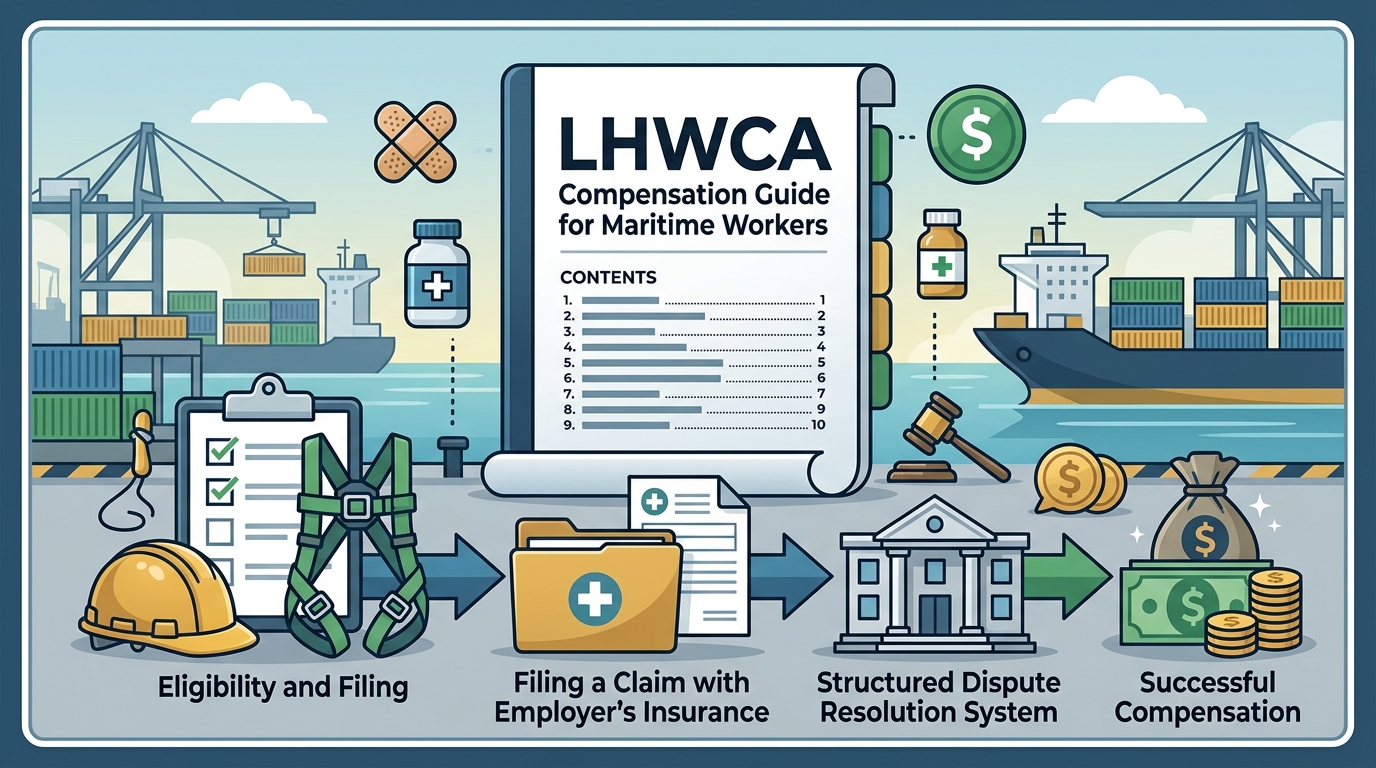
Compensation for work-related injuries under the Federal Longshore and Harbor Workers' Compensation Act (LHWCA) is available to maritime workers who suffer physical harm while performing their duties. The process involves proving eligibility, filing a claim with the employer's insurance carrier, and navigating a structured dispute resolution system if benefits are denied. This guide covers the specific eligibility requirements and the step-by-step dispute resolution process for longshoremen and harbor workers in South Carolina.
LHWCA Eligibility Requirements
The Federal Longshore and Harbor Workers' Compensation Act is a federal statute that provides medical benefits and wage replacement to specific maritime workers. Unlike state workers' compensation laws, the LHWCA applies to employees who work on navigable waters or in maritime employment. Understanding these specific criteria is the first step in securing compensation.
Defining Maritime Employment
Mari time employment is a legal status that requires the employee to perform work that is related to the operation, management, construction, or repair of vessels and their cargoes. The work must be performed on navigable waters. This definition is broader than simply being on a ship; it includes work performed on piers, wharves, dry docks, terminals, and other port areas.
The Nexus Requirement
The nexus requirement is the legal standard that establishes a direct connection between the employee's work and the maritime environment. The injury must arise out of and in the course of employment. For example, a longshoreman who is crushed by a container while loading a ship meets this requirement. The work must be integral to the maritime industry, not merely incidental to it.
Excluded Workers
Not all workers near the water are covered by the LHWCA. The statute specifically excludes certain groups, including state and local government employees, and those covered by other federal compensation acts like the Jones Act for seamen. It is critical to determine if your specific job title and duties fall within the statutory definition before filing a claim.
Dispute Resolution Process
If an employer or their insurance carrier denies a claim or fails to pay benefits, the LHWCA provides a formal administrative process for resolution. This process is designed to be accessible to workers without the need for immediate litigation in federal court.
Filing a Claim with the Carrier
The first step is to notify the employer of the injury and file a claim with the employer's workers' compensation insurance carrier. The carrier has a duty to investigate the claim. If the carrier accepts the claim, they will begin paying medical benefits and wage replacement. If they deny the claim, they must provide a written explanation of the reasons for the denial.
Requesting a Hearing Before an ALJ
If the dispute is not resolved through negotiation, the worker can request a hearing before an Administrative Law Judge (ALJ) at the Office of Workers' Compensation Programs (OWCP). The ALJ will review the evidence, hear testimony, and issue a decision. This is an administrative proceeding, not a trial in a traditional court.
Appealing to the Benefits Review Board
If either party disagrees with the ALJ's decision, they can appeal to the Employees' Compensation Appeals Board (ECAB). The ECAB reviews the ALJ's decision for legal errors. After the ECAB issues its decision, the final step is an appeal to the United States Court of Appeals for the appropriate circuit. This multi-tiered system ensures that workers have multiple opportunities to have their case reviewed.
| Stage | Body | Function |
|---|---|---|
| Initial Claim | Insurance Carrier | Investigates and accepts or denies the claim |
| Administrative Hearing | OWCP ALJ | Holds a hearing and issues a decision |
| Appeal | ECAB | Reviews the ALJ's decision for legal errors |
| Judicial Review | Federal Court of Appeals | Final review of the case |
Key Takeaways
- The LHWCA covers workers engaged in maritime employment on navigable waters.
- Eligibility requires a direct nexus between the work performed and the maritime environment.
- Workers must file claims with their employer's insurance carrier first.
- Disputes are resolved through an administrative process involving an ALJ and the ECAB.
- The Jones Act applies to seamen, which is a different legal framework than the LHWCA.
- Timely notification of injury is critical to preserving your rights.
- Legal representation is highly recommended to navigate the complex federal regulations.
- Christmas Injury Lawyers specializes in representing longshoremen and harbor workers in South Carolina.
Frequently Asked Questions
Who is eligible for LHWCA benefits?
Workers who are engaged in maritime employment on navigable waters are eligible. This typically includes longshoremen, harbor workers, and those who construct or repair vessels.
What is the difference between the LHWCA and the Jones Act?
The LHWCA is a no-fault compensation system for maritime workers, while the Jones Act allows seamen to sue for negligence. The Jones Act requires proof of fault, whereas the LHWCA does not.
How long do I have to file a claim?
There are strict deadlines for filing claims under the LHWCA. It is essential to notify your employer immediately and file your claim within the statutory time limits to avoid losing your rights.
Can I hire a lawyer for my LHWCA claim?
Yes, you can hire a lawyer to represent you. Many workers choose to work with an attorney to ensure their claims are properly filed and to navigate the dispute resolution process.
What benefits are available under the LHWCA?
Benefits include medical treatment, wage replacement for time lost from work, and compensation for permanent disability. In cases of death, the statute provides benefits to the dependents of the deceased worker.
Where can I find legal help in South Carolina?
Christmas Injury Lawyers provides specialized representation for maritime workers in South Carolina. You can to discuss your specific situation.
Conclusion
Navigating the Federal Longshore and Harbor Workers' Compensation Act requires a clear understanding of eligibility and the administrative dispute process. By meeting the nexus requirement and following the proper filing procedures, maritime workers can secure the compensation they deserve. For those in South Carolina facing these complex legal challenges, Christmas Injury Lawyers offers dedicated advocacy to protect your rights and ensure you receive the benefits you are entitled to under federal law.